Strategic trimming is based on the biology of the tree, not simply its appearance. Every cut is made with a purpose, helping healthy limbs thrive while minimizing stress on the tree. Our goal is to improve long-term health while reducing hazards that could threaten nearby structures, vehicles, or pedestrians.
Signs Your Tree May Need Professional Care
Many tree problems develop gradually, making them easy to overlook until significant damage has occurred. Regular inspections can identify concerns early enough that corrective pruning may still be an effective solution.
Some common warning signs include:
- Dead or brittle branches throughout the canopy
- Sparse leaf growth during the normal growing season
- Branches rubbing together
- Cracks developing in major limbs
- Fungus growing near the trunk or root flare
- Unusual bark peeling or discoloration
- Excessive leaning after storms
- Branches hanging over roofs, sidewalks, or utility lines
Not every symptom points to the same issue. Some indicate disease, while others may result from drought stress, poor soil conditions, or insect activity. Our inspections allow us to determine the underlying cause before recommending treatment.
Every Tree Responds Differently
Species, age, growing conditions, and previous maintenance all affect how a tree recovers after pruning. A mature oak requires a different approach than a pine or ornamental tree. We tailor every trimming plan to the tree itself rather than applying the same technique to every property.
When is tree trimming in Los Angeles used as a medical intervention?
Professional pruning often functions much like a medical procedure. Instead of treating symptoms alone, carefully selected cuts help address the source of a tree’s decline while encouraging healthy new growth.
One of the primary goals is removing diseased or dying branches before problems spread farther throughout the canopy. Certain fungal infections remain isolated within specific limbs during their early stages. Removing those affected areas can reduce additional damage while allowing healthier portions of the tree to continue developing.
Strategic pruning may also improve air circulation throughout dense canopies. Better airflow reduces trapped moisture that encourages fungal development while allowing additional sunlight to reach interior branches and leaves.
Our ISA Certified Arborist also evaluates structural balance during every visit. Trees carrying excessive weight on one side may become vulnerable during high winds or heavy rain. Selective pruning redistributes weight across the canopy, lowering stress on major scaffold limbs without removing more foliage than necessary.
Nutrient distribution also improves after unhealthy branches are removed. Instead of supporting damaged limbs with little chance of recovery, the tree redirects energy toward vigorous branches capable of continued growth.
This type of tree trimming in Los Angeles focuses on preserving the tree whenever practical rather than removing healthy wood unnecessarily. Each pruning cut follows accepted arboricultural practices designed to support recovery over the coming seasons.
Seasonal Timing Can Influence Recovery
Knowing when to prune is nearly as important as knowing where to prune.
Certain tree species recover more successfully during dormant periods because disease pressure is reduced and fresh wounds have more opportunity to seal properly before active growth resumes. Other species respond better after seasonal growth slows.
Weather patterns throughout Southern California also affect scheduling. Extended heat waves, prolonged drought, or unusually wet periods may influence when trimming should occur. Our recommendations consider both the species and current environmental conditions so every trimming plan gives the tree its best opportunity to recover.
When a tree has declined beyond recovery, we may recommend tree removal instead of continued corrective pruning. Our objective is always to provide the safest and most practical solution based on the tree’s actual condition rather than performing unnecessary work.
How do uncertified trimming practices spread local tree diseases?
Many property owners assume trimming simply involves cutting branches. In reality, improper pruning techniques can create new health problems while spreading existing diseases from one property to another.
One of the greatest risks comes from contaminated equipment. Pruning saws, hand shears, pole pruners, and chainsaws can carry microscopic pathogens from infected trees directly into healthy tissue if they are not properly disinfected between jobs.
Southern California landscapes face several threats that make sanitation especially important. Bacteria associated with Xylella fastidiosa, which contributes to Oleander leaf scorch, may spread through infected plant material and insect vectors. Improper pruning practices can increase opportunities for disease transmission. Likewise, invasive wood-boring beetles often exploit fresh wounds on already stressed trees, accelerating decline.
Professional crews reduce these risks by following strict sanitation procedures throughout every project. Equipment is cleaned appropriately, damaged branches are removed responsibly, and infected material is handled carefully to reduce the possibility of introducing pathogens elsewhere on the property.
Improper pruning cuts create additional problems beyond disease transmission. Large flush cuts remove the natural protective branch collar, slowing wound closure and increasing exposure to decay organisms. Topping a tree often stimulates weak, fast-growing shoots that become structurally unstable while placing even greater stress on an already unhealthy tree.
Our approach emphasizes precise cuts that support natural healing while preserving the structural integrity of each tree. Careful pruning not only improves appearance but also helps reduce long-term biological stress.
What diagnostic steps must precede a commercial canopy reduction?
Large-scale pruning should never begin with a chainsaw. That’s true whether we’re working on a home or a commercial property. A professional LA tree trimming assessment identifies whether canopy reduction is appropriate and how much foliage can be safely removed without causing additional decline.
Before recommending significant pruning, our ISA Certified Arborist evaluates several factors:
- The condition of the root flare and trunk base
- Soil moisture retention and drainage
- Evidence of canopy dieback
- Cracks, cavities, or weak branch unions
- Oozing bark or fungal growth
- Previous pruning wounds
- Proximity to buildings, parking areas, and utility lines
This inspection helps distinguish between a tree that can recover through targeted pruning and one that presents a significant safety risk. Blindly removing large portions of a canopy can shock a stressed tree and accelerate decline, which is why diagnosis always comes first.
How strategic pruning protects nearby structures
Tree health is only one part of the equation. Overgrown or weakened branches can threaten roofs, fences, vehicles, and pedestrian areas.
Our pruning plans focus on reducing these risks while preserving as much healthy canopy as possible. We may selectively remove limbs that:
- Extend too close to rooftops
- Interfere with building facades
- Block visibility near driveways
- Hang over walkways
- Show signs of structural weakness
By addressing hazardous growth early, property owners often avoid more extensive damage after wind events or heavy seasonal storms.
When advanced equipment becomes necessary
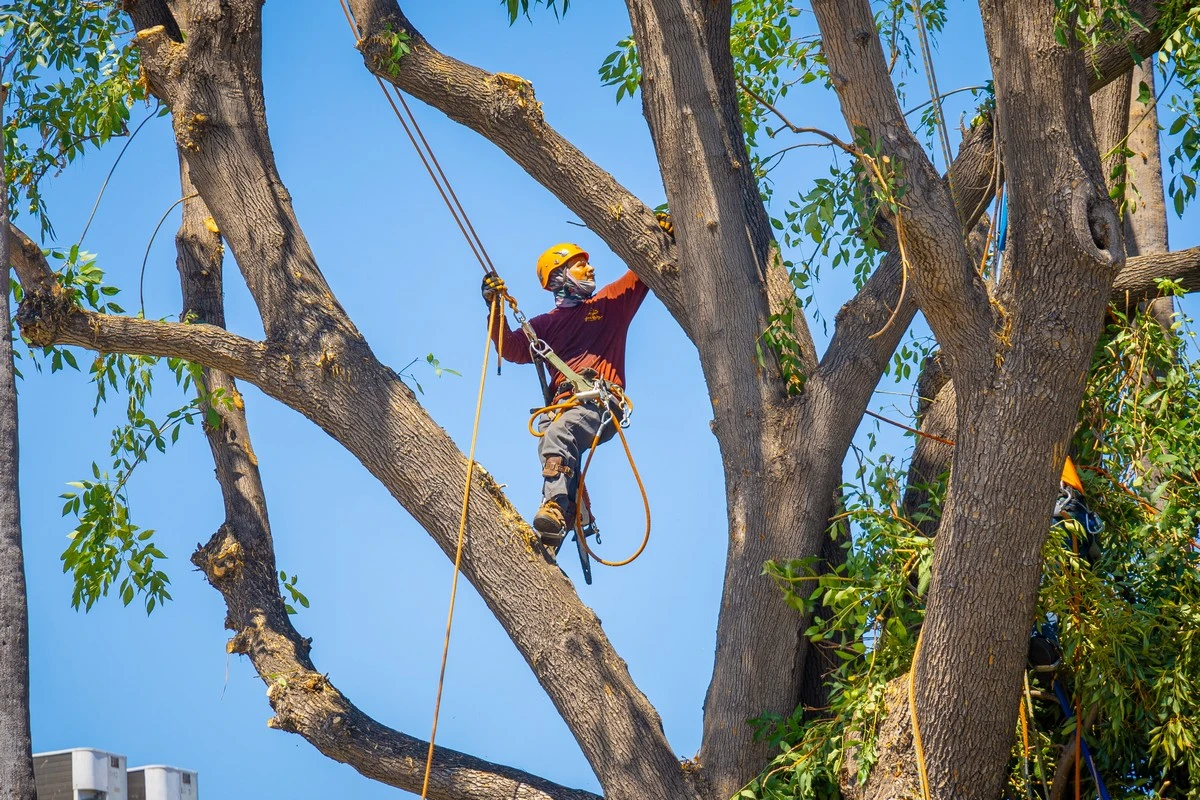
Some trees cannot be accessed safely with standard climbing techniques alone. Extremely tall trees, trees with compromised structure, or trees located in tight spaces may require specialized equipment.
In those situations, crane-assisted tree removal may be the safest option if the tree is beyond recovery. Using a crane allows large sections to be lowered in a controlled manner, reducing the risk of damage to nearby homes, landscaping, and hardscapes.
Even when removal is necessary, careful planning remains essential. Our crews coordinate access, traffic considerations, and debris management so the project is completed efficiently and safely.
Keeping surrounding vegetation under control
Tree health can also be affected by competition from dense vegetation. Overgrown brush may limit airflow, increase fire hazards, and make inspections more difficult.
As part of broader property maintenance, brush clearing can improve access around trees while reducing excessive vegetation that contributes to crowded growing conditions. Clearing unmanaged brush also helps crews identify hidden hazards and monitor tree health more effectively over time.
Long-term care helps trees stay healthier
Waiting until a tree becomes severely damaged before hiring professional tree trimming in Los Angeles often limits the available treatment options. Routine inspections and preventive pruning generally provide better results than emergency work performed after major decline has already occurred.
Many property owners schedule periodic evaluations so potential problems can be identified earlier. During these visits, we assess canopy density, structural development, pest activity, and signs of environmental stress. Small corrective cuts made at the right time are frequently more beneficial than large reductions performed years later.
Consistent maintenance is especially valuable for mature trees that provide significant shade and curb appeal. These trees often represent a substantial investment in the landscape, and proactive care can help extend their useful life for many years.
How we help determine the best course of action
Whether the goal is preserving a valued shade tree, reducing storm hazards, improving property appearance, or addressing declining growth, strategic tree trimming in Los Angeles can often play a significant role in restoring health and extending the life of a tree when performed with proper diagnostic care and professional pruning practices.
Every property presents different challenges, and every tree responds differently to stress. Some trees recover remarkably well after targeted pruning, while others may have hidden structural or root problems that make preservation unrealistic.