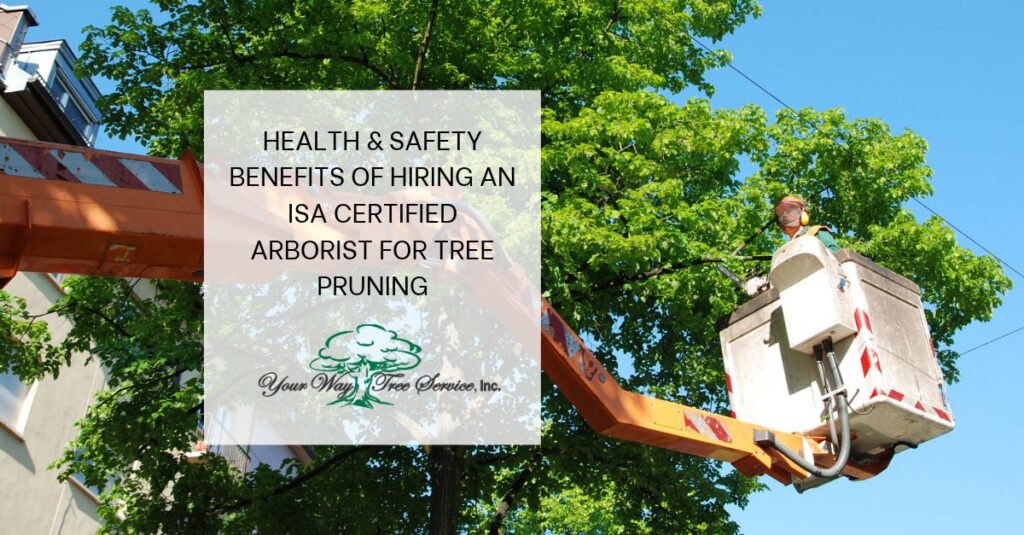
What Are the Primary Benefits of Hiring an ISA Certified Arborist for Tree Pruning?
The benefits of hiring an ISA-certified arborist for tree pruning ensures that every pruning cut adheres to ANSI A300 industry standards and woody plant biology, preserving the branch collar to prevent internal decay (CODIT). Certified arborists also reduce storm failure risks using ANSI Z133 safety protocols, eliminate hazardous practices like tree topping, and ensure strict compliance with local municipal tree protection ordinances.
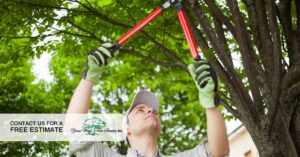
Precision Cuts Guided by Tree Biology and ANSI A300 Pruning Standards
Unlike general landscapers or uncredentialed tree trimmers who approach canopies with hedge-shearing habits or arbitrary “hat-racking” cuts, an International Society of Arboriculture (ISA) Certified Arborist approaches tree care through the lens of vascular physiology and structural mechanics. Every tree species responds differently to wounding, energy allocation, and seasonal growth cycles.
How ANSI A300 Pruning Standards Protect Tree Vascular Health
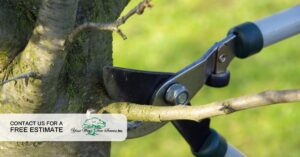
When a branch is removed improperly, the tree loses its natural biochemical barrier against pathogens. Credentialed arborists execute cuts in strict accordance with ANSI A300 (Part 1) Pruning Standards, targeting the exact anatomical boundary just outside the branch bark ridge and the branch collar.
- Activating CODIT (Compartmentalization of Decay in Trees): Trees do not “heal” like animal tissue; instead, they wall off injured wood by forming chemical and physical boundary zones. Preserving the swollen tissues of the branch collar allows the tree to generate callus wood and seal the wound cleanly. Flush cuts—which slice into the trunk tissue—destroy this protective zone, inviting airborne fungal spores, wood-boring beetles, and heartwood rot directly into the main stem.
- Eliminating Destructive Practices: Unqualified operators frequently rely on tree topping (severing main vertical leaders between nodes) or lion-tailing (stripping all interior branches and leaving foliage only at the tips). Topping induces panic growth in the form of weakly attached epicormic water sprouts, while lion-tailing shifts the center of gravity outward, turning branches into leverage arms that snap easily during high winds.
- Tailoring Cuts to Regional Species: Southern California landscapes feature a complex mix of native coast live oaks (Quercus agrifolia), California sycamores (Platanus racemosa), Mediterranean olives, jacarandas, and towering eucalyptus. A certified arborist understands that pruning native oaks during warm, wet spring months can expose fresh wounds to oak wilt vectors and wood-boring pests, whereas strategic late-summer or winter structural thinning maximizes drought resilience without triggering sunscald on thin-barked species.
ISA Certified Arborist vs. General Landscaper: Technical & Safety Comparison
Property owners often weigh the upfront cost of credentialed arboriculture against lower bids from general lawn maintenance crews. Evaluating the structural, biological, and legal differences highlights why specialized certification safeguards both tree longevity and household liability.
| Evaluation Metric | ISA Certified Arborist | Uncertified Trimmer / General Landscaper |
|---|---|---|
| Pruning Methodology | Follows ANSI A300 Standards; uses crown cleaning, structural thinning, and reduction cuts outside the branch collar. | Often uses flush cuts, stub cuts, tree topping, or lion-tailing that destroy natural branch defense zones. |
| Safety & Rigging Standards | Strictly adheres to ANSI Z133 Safety Requirements; utilizes zero-impact rigging, friction brakes, and spike-free climbing on live trees. | Frequently climbs live trees using gaffs/spikes, puncturing the cambium and spreading vascular diseases from tree to tree. |
| Risk & Biomechanical Evaluation | Trained in ISA Tree Risk Assessment Qualification (TRAQ) principles to detect co-dominant stems, included bark, and root decay. | Focuses purely on cosmetic shaping or rapid brush clearance without assessing load-bearing canopy mechanics. |
| Insurance & Legal Liability | Carries verifiable commercial general liability and active workers’ compensation insurance for high-risk aerial work. | Often lacks tree-specific workers’ compensation, leaving homeowners financially liable for on-site injuries or roof damage. |
| Municipal & Heritage Compliance | Navigates local city tree ordinances, protected species permits, and coastal/hillside brush clearance mandates. | Unaware of protected native tree codes, exposing property owners to steep municipal fines and mandatory mitigation plantings.[cite: 27] |
Reducing Storm Failure Risks and Safeguarding Homes Under ANSI Z133 Safety Rules
Southern California’s microclimates present dual seasonal threats to mature urban canopies: autumn offshore Santa Ana winds that, according to the National Weather Service (NWS), frequently generate dry, turbulent gusts exceeding 50 to 70 mph through canyon passes and foothill communities, followed by intense winter atmospheric river rainstorms that saturate shallow clay and decomposed granite soils while adding immense water weight to dense foliage.
Biomechanical Canopy Management and Wind-Load Reduction
An ISA Certified Arborist evaluates a tree’s entire structural architecture before making a single cut. Rather than over-thinning the interior canopy—which actually increases wind whip—arborists perform selective crown reduction and outer-edge tip weighting to reduce the “sail effect” of dense canopies.
- Correcting Co-Dominant Stems and Included Bark: When two competing leaders grow at a narrow V-shaped angle, bark becomes trapped between them, preventing strong connective wood fibers from forming. Certified arborists identify these weak unions early and apply subordinate pruning cuts or install dynamic structural cabling and bracing systems to prevent catastrophic trunk splitting.
- Removing Deadwood and Overextended Limbs: Dying branches harbor carpenter ants and decay fungi while posing immediate strike hazards over rooflines, solar arrays, utility drops, and pedestrian walkways. Targeted professional tree trimming and pruning services systematically clear hazardous deadwood and establish safe clearance buffers around structures without disfiguring the tree’s natural silhouette.
Strict Adherence to ANSI Z133 Aerial Safety Protocols
Tree work ranks among the most hazardous professions in the United States. ISA Certified Arborists operate under ANSI Z133 Safety Requirements for Arboricultural Operations, which govern minimum approach distances near energized overhead power lines, aerial lift inspections, personal protective equipment (PPE), and controlled rigging physics.
When dismantling heavy limbs overhanging glass sunrooms, historic tile roofs, or narrow side yards, certified crews calculate branch weight and utilize lowering lines, friction devices, and rigging blocks to guide wood safely to the ground. Equally important, legitimate arboricultural firms maintain active workers’ compensation and property damage insurance, shielding homeowners from devastating legal and medical liability.
Boosting Long-Term Property Value, Pest Resistance, and Local Code Compliance
According to USDA Forest Service urban forestry research, healthy, structurally sound mature trees can increase residential property values by 10% to 15% while significantly lowering summer cooling costs through strategic shade. Conversely, neglected or butchered trees become financial liabilities that require premature, costly hazardous tree removal services when internal decay compromises trunk stability.
Enhancing Canopy Microclimates and Suppressing Pests
Dense, unpruned canopies trap stagnant humidity and block sunlight from reaching interior branches, creating an ideal breeding ground for foliar pathogens and piercing-sucking insects. Strategic thinning opens airflow channels throughout the crown, accelerating leaf drying after coastal fog or overhead irrigation.
- Disease and Insect Mitigation: Improved air circulation and light penetration naturally suppress powdery mildew, anthracnose in California sycamores, sooty mold, and scale infestations.
- Early Pathogen Detection: Because certified arborists inspect canopies up close, they routinely spot early warning signs of invasive regional threats—such as the polyphagous shot hole borer (PSHB), goldspotted oak borer (GSOB), or Phytophthora root rot—before infestations spread across an entire property. For official guidance on identifying and managing regulated forest and urban tree pests, property owners can consult the USDA Forest Service Forest Health Protection program.
Navigating Municipal Protected Tree Ordinances
Across Los Angeles County, Ventura County, Orange County, and the Inland Empire, strict municipal codes—such as the Los Angeles County Oak Tree Ordinance and Pasadena Municipal Code Chapter 8.52—regulate the pruning and removal of native and heritage trees, particularly coast live oaks, valley oaks, California sycamores, and Southern California black walnuts. Many jurisdictions prohibit removing more than 15% to 20% of a protected tree’s live foliage within a single pruning cycle and require formal arborist reports or municipal permits before work begins.
Hiring an ISA Certified Arborist ensures every pruning specification complies with local urban forestry codes, protecting homeowners from stop-work orders, administrative penalties, and mandatory tree-replacement fines.
The Benefits of Hiring an ISA Certified Arborist Tree for Pruning: Frequently Asked Questions
How do I verify if an arborist is genuinely ISA Certified?
Ask the arborist for their unique ISA Certification ID number and verify it directly through the official International Society of Arboriculture “Verify a Credential” online database. Confirm that their credential status is active and match the ID against a government-issued photo ID and valid insurance certificates.
Every credentialed professional receives an official identification card and registry listing from the ISA. Checking this registry confirms the arborist passed rigorous examinations in tree biology, diagnosis, pruning, safety, and soil management, and maintains ongoing continuing education units (CEUs).
What is the best time of year to prune trees in Southern California?
Most deciduous and evergreen trees in Southern California are best pruned during late autumn through winter (November to February) when growth slows and pest activity drops. Native oaks should strictly be pruned during dry late-summer or winter windows to prevent fungal infection and wood-boring beetle attacks.
While dead, broken, or storm-damaged limbs can and should be removed safely at any time of year, major structural pruning is best timed to match the tree’s physiological dormancy. Avoid heavy canopy thinning during peak summer heatwaves, as sudden sun exposure can scald newly exposed interior bark.
How much of a tree’s canopy can be safely removed in one pruning session?
Under ANSI A300 pruning standards, no more than 25% of a mature, healthy tree’s live foliage should be removed within a single growing season. For older, stressed, or protected native trees, certified arborists typically limit live crown removal to 10% to 15%.
Removing excessive foliage starves the root system of vital carbohydrates produced through photosynthesis, forcing the tree to deplete stored energy reserves and triggering stress-induced water sprouts that weaken overall branch architecture.
Why is tree topping harmful to mature trees?
Tree topping removes 50% to 100% of a tree’s leaf-bearing crown by cutting main branches back to stubs, starving the roots and exposing large wounds to decay fungi. The tree responds by rapidly growing weakly attached vertical shoots that are far more prone to breaking in windstorms than the original limbs.
Topping permanently ruins a tree’s natural form, accelerates sunburn on exposed limbs, and dramatically increases long-term maintenance costs because the rapid regrowth requires frequent, hazardous corrective pruning. If a tree is too tall for its location, an ISA Certified Arborist uses crown reduction cuts back to lateral branches at least one-third the diameter of the cut stem.