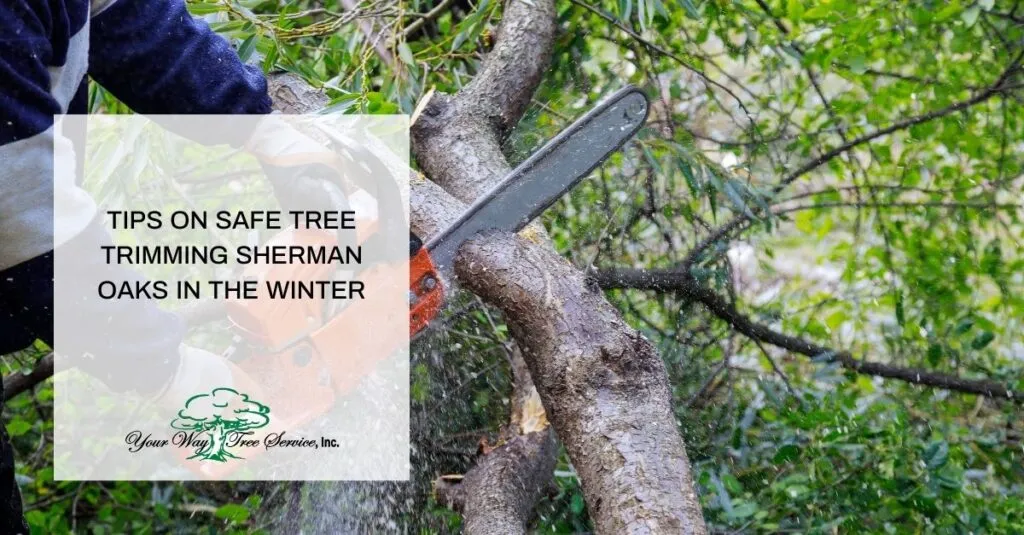
Winter is the optimal dormancy window to get a Sherman Oaks tree trim. Deciduous species drop their foliage, giving ISA Certified Arborists an unobstructed view of structural flaws, fungal cankers, and dead wood. Trimming during dormancy minimizes SAP flow, reduces stress on native species (such as Coast Live Oaks and Sycamores), and seals cut boundaries before spring pest surges.
Additionally, proactive winter pruning mitigates severe storm risks triggered by high-velocity Santa Ana wind events and heavy winter rainfall.
Proper tree maintenance across Sherman Oaks and the greater San Fernando Valley requires a specialized seasonal strategy. While Southern California winter conditions lack severe snowpack, temperate winter dormancy remains the single most important window for structural pruning, hazard mitigation, and crown thinning.
During the late fall and winter months, broadleaf deciduous trees shed their canopy, exposing the intricate branch architecture beneath. This leaf drop allows property owners and Certified Arborists to identify hidden decay, structural crossing branches, and compromised crotches that remain concealed under dense summer foliage.
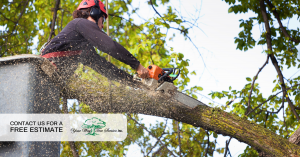
However, winter tree pruning introduces distinct physical safety hazards, specialized equipment requirements, and microclimate considerations unique to Los Angeles County.
This guide details professional winter tree care practices, safety standards, risk mitigation strategies, and the arboricultural principles necessary to protect structural tree health and surrounding property.
Winter Arboriculture in the San Fernando Valley Microclimate
Sherman Oaks sits along the base of the Santa Monica Mountains, exposing local urban forests to unique atmospheric stressors during winter. While inland Valley temperatures remain milder than high-elevation zones, winter weather patterns bring heavy localized rainstorms and high-velocity Santa Ana wind gusts reaching 40 to 60 mph.
Regional Advantages of Winter Trimming
- Dormancy Stress Reduction: Pruning while the tree’s metabolic activity is slowed minimizes sap loss and prevents energy depletion.
- Pathogen & Pest Defense: Fungal spores and insect vector activity, such as bark beetles and shot hole borers, are significantly lower during cooler winter months.
- Structural Visibility: Leaf drop reveals internal decay, hollow cavities, parasitic mistletoe, and rubbing limbs that require precision tree removal.
- Santa Ana Windproofing: Thinning dense canopies reduces the “sail effect,” enabling high winds to pass safely through the tree without tearing away major scaffolds.
- Saturated Soil Risk Mitigation: Trimming heavy weight off over-extended limbs prevents mature trees from uprooting when winter rains turn clay soils soft and unstable.
Equipment Standards: Chainsaw Limitations & Manual Pruning Tools
Operating cutting tools in damp winter conditions demands strict adherence to equipment protocols. Standard gasoline-powered chainsaws present unique operational hazards during wet or cold weather and should generally be avoided by non-professionals.
Safety Risks of Gas-Powered Chainsaws in Winter
- Sub-Optimal Fuel Combustion: Cold, damp ambient air causes poor fuel vaporization, leading to frequent stalling and unpredictable throttle control.
- Damp Substrate Slippage: Wet bark and damp footings increase the risk of losing control during a kickback event.
- Vibration-Induced Fatigue: Cold weather accelerates hand-arm vibration syndrome (HAVS) and muscle fatigue, reducing operational control.
Recommended Manual Pruning Tools & Safety Gear
- Precision Handsaws: High-carbon steel curved pruning saws for clean cuts on limbs up to 4 inches in diameter.
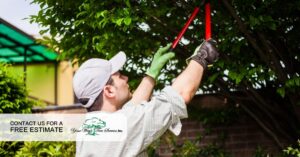
- Bypass Loppers: Heavy-duty loppers utilizing a scissor-action cut to prevent crushing delicate cambium layers.
- Personal Protective Equipment (PPE):
- ANSI Z87.1 Approved Eye Protection: Sealed goggles to protect against falling wood chips and sap drop.
- Head Protection: Hard hat with an integrated chin strap for working under dense canopies.
- Cut-Resistant Gloves: High-grip leather or synthetic gloves offering thermal protection and abrasion resistance.
- Non-Slip Footwear: Steel-toe work boots equipped with deep rubber lugs for traction on damp soil and wet ladders.
A DIY Sherman Oaks Tree Trim vs. ISA Certified Arborist Sherman Oaks Tree Trim
An ISA Certified Arborist team is just that: certified. Knowing the operational boundaries between light homeowner maintenance and complex arborist services is critical to preventing personal injury, property damage, and permanent tree loss.
| Operational Criteria / Metric | DIY Homeowner Maintenance | ISA Certified Arborist Service |
|---|---|---|
| Max Safe Work Height | Ground level up to 10 feet (using pole saws) | Unlimited height (bucket trucks, climbing gear, crane lifts) |
| Permitted Pruning Tools | Manual handsaws, loppers, bypass shears | Commercial chainsaws, hydraulic pruners, tub grinders |
| Target Limb Diameter | Small branches (< 2 inches in diameter) | Heavy structural limbs (4+ inches to primary trunks) |
| Proximity to Power Lines | Must maintain a minimum 10-foot clearance | Utility-line clearance certified (ANSI Z133 standards) |
| Structural Assessment | Visual surface identification of dead wood | Sonic tomograph, aerial root crown, internal decay testing |
| Risk & Liability Exposure | Full homeowner liability for injury or property damage | Covered by $2M+ Commercial General Liability & Workers’ Comp |
| Waste Disposal | Residential green bin bundling | Industrial wood chipping, tub grinding, and full haul-off |
The 3-Cut Method: Preventing Bark Tears and Substrate Damage
When removing branches larger than 1 inch in diameter, cutting straight down from the top causes the heavy branch to snap under its own weight before the cut is completed. This tears the bark down the side of the trunk, exposing the tree to heart-rot fungi and severe disease.
To protect structural integrity, professionals utilize the 3-Cut Pruning Method.
Step-by-Step 3-Cut Process
- The Undercut (Cut 1): Make an undercut on the underside of the branch approximately 12 to 18 inches away from the main trunk. Saw through one-third of the branch’s thickness. This cut prevents falling wood from stripping the bark downward.
- The Relief Cut (Cut 2): Move 2 to 3 inches outward past the undercut and cut completely through the top of the branch. As the heavy limb falls, it breaks cleanly at the undercut without damaging the main trunk.
- The Final Collar Cut (Cut 3): Locate the branch bark ridge and branch collar (the swollen area where the limb joins the trunk). Make a final clean cut just outside the branch collar. Never make a flush cut against the trunk, as this destroys the tree’s natural compartmentalization wall.
Neighbor Property Boundaries and Legal Pruning Protocols
Overhanging branches across property boundaries are a frequent source of neighbor disputes in high-density San Fernando Valley neighborhoods. California Civil Code dictates specific legal framework parameters for boundary tree management.
Legal Guidelines for Property Line Pruning
- Vertical Boundary Rights: Property owners have the legal right to trim branches that extend over their property line up to the vertical boundary.
- Duty of Tree Care: Pruning must not damage the health of the neighbor’s tree. Over-pruning (removing more than 25% of the live canopy) that leads to tree decline or death can make the individual liable for treble (triple) damages under California law.
- Prohibition of Trespassing: You cannot cross the property line, enter the neighbor’s yard, or cut branches on their side without explicit permission.
- Encroachment & Root Barriers: If roots from a neighbor’s tree cause hardscape lifting or structural foundation damage, consult a certified arborist before severing major roots, as cutting primary structural roots can destabilize the tree and cause structural collapse.
Sherman Oaks Tree Trim FAQs
Is it safe to trim trees near power lines during winter?
No, trimming trees near electrical power lines is extremely dangerous and should never be attempted by property owners. High winds and winter rain can cause tree branches to become energized conductors. Stay at least 10 feet away from low-voltage service drops and contact an OSHA-certified utility line clearance contractor or the Los Angeles Department of Water and Power (LADWP) for line-clearance trimming.
Should evergreen oak trees in Sherman Oaks be pruned in the winter?
Yes, late winter is an excellent time to prune Coast Live Oaks (Quercus agrifolia) and Valley Oaks (Quercus lobata) in Southern California. Pruning during cool winter months reduces stress and minimizes exposure to oak bark beetles and goldspotted oak borers, which are active in warmer seasons.
How much of a tree’s canopy can be safely removed during winter trimming?
Never remove more than 20% to 25% of a mature tree’s living canopy in a single season. Over-pruning (often called “topping” or “lion’s tailing”) starves the tree of photosynthetic capacity, triggers stress shoots (water sprouts), and drastically increases susceptibility to decay and pest infestation.
Can I use a ladder on wet grass to trim elevated tree branches?
No. Setting up a ladder on damp soil, mud, or wet turf is one of the leading causes of severe residential yard injuries. Ladder feet easily sink unevenly into soft soil, causing sudden tipping. Use extended pole saws from stable ground or hire professional climbing crews using ANSI-compliant harness and rigging systems.
What should I do if a winter Santa Ana storm damages a large tree limb?
Immediately clear the area beneath the damaged limb and keep children and pets away. Do not attempt to pull down hanging or splintered limbs (“widowmakers”) yourself, as they are under extreme tension. Contact an emergency arborist service equipped with cranes, rigging equipment, and aerial lifts to safely remove storm-damaged limbs.
Do tree cuts need to be sealed with paint or pruning sealers after trimming?
No. Modern arboricultural research proves that wound dressings, paints, and asphalt sealers trap moisture against the wood, creating an ideal environment for fungal rot. Trees heal through a natural process called CODIT (Compartmentalization Of Decay In Trees). Clean cuts made outside the branch collar allow the tree to seal its own wounds naturally.