
What makes crane-assisted tree removal essential for luxury Brentwood estates?
Crane-assisted Brentwood tree removal provides zero-impact dismantling for massive canopy species located near high-value architecture, swimming pools, and tight Westside access points. By securing branches and heavy trunk sections before cutting, arborists hoist timber directly over multi-story roofs and delicate hardscapes to designated staging areas without risking ground impact.
Brentwood Tree Removal: Hazard Mitigation, Crane Rigging & Site Restoration
Managing luxury landscapes across Brentwood, Bel-Air, Pacific Palisades, and the broader Westside demands a level of precision that far exceeds standard residential landscaping. Towering, mature canopies frame these high-value estates, but when an aging tree suffers structural decay or poses an immediate threat to high-value architecture, professional removal becomes critical.
Executing large-canopy removals in Brentwood requires navigating unique local dynamics—from microclimates like coastal fog rolls down Santa Monica Canyon and fierce Santa Ana wind corridors through Mandeville Canyon, to narrow hillside access roads and strict municipal preservation codes.
As ISA Certified Arborists, we utilize advanced arboricultural science, industrial crane rigging, and specialized low-impact machinery to extract hazardous trees safely while preserving surrounding hardscapes, manicured turf, and historic native flora.
Executing Crane-Assisted Dismantling for Large-Canopy Hazard Trees
High-value Westside properties frequently feature mature specimens, such as massive Eucalyptus globulus, invasive Ficus microcarpa, heavy Pinus canariensis, and towering Washingtonia robusta palms, that reach heights of 60 to over 100 feet. When these mature trees experience internal fungal decay (Ganoderma or Armillaria root rot), root shear, or severe storm damage, conventional sectional dismantling is often too risky.
Dropping heavy limbs near tile roofs, glass curtain walls, infinity pools, or tennis courts presents unacceptable liability.
By integrating precision crane-assisted rigging and zero-impact lowering systems, heavy canopy sections are extracted with absolute control.
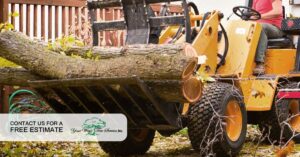
A high-tonnage mobile crane stabilizes large canopy portions before any chainsaw cut is executed. Once the climber severs the limb or trunk section, the crane hoists the timber vertically over building footprints, perimeter walls, and delicate landscape features, lowering it directly into a designated ground processing zone.
Brentwood Tree Removal Comparison Matrix
| Removal Parameter | Standard Sectional Pruning & Dismantling | Precision Crane-Assisted Rigging |
|---|---|---|
| Ideal For | Open yards, small-to-mid canopy trees, accessible perimeter zones[cite: 25] | Massive canopy trees, tight side yards, multi-story roof overhangs[cite: 25] |
| Ground Impact Risk | Moderate to High (Rigging drop-zones require soil/turf clearance)[cite: 25] | Zero-Impact (Timber is hoisted vertically and cleared overhead)[cite: 25] |
| Target Tree Species | Ornamental specimens, young Fruit trees, small Crape Myrtles[cite: 25] | Mature Eucalyptus, Invasive Ficus, Canary Island Pine, Historic Oaks[cite: 25] |
| Operational Timeline | Multi-day labor-intensive lowering[cite: 25] | Accelerated single-day canopy extraction[cite: 25] |
| Hardscape Protection | Manual rigging ropes, lower weight limits[cite: 25] | Heavy-duty outrigger matting, high-tonnage lifting capacities[cite: 25] |
Protecting High-Value Grounds and Narrow Access Points
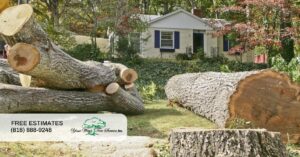
Preserving custom masonry, imported flagstone, subterranean drainage channels, and delicate turf during heavy tree extraction requires active ground mitigation. Brentwood estates often sit on tight, terraced lots along winding access routes like San Vicente Boulevard, Sunset Boulevard, and Chalon Road, leaving zero room for equipment error.
How are high-value landscapes protected during heavy equipment tree operations?
Arborists employ engineered ground-protection protocols, including heavy-duty composite matting to distribute axle loads, synthetic dynamic slings to absorb shock forces, and compact articulated machinery that fits through 36-inch gates without damaging surrounding hardscapes or compacting sensitive soils.
To ensure pristine estate grounds remain undisturbed, we enforce strict site-protection standards:
- Composite Ground Protection Matting: Heavy-duty HDPE matting distributes industrial equipment weight across turf and delicate paving, preventing subsoil compaction, lawn rutting, and stone cracking.
- Synthetic Dynamic Slings & Rigging Blocks: High-tensile arborist slings absorb sudden force loads during mechanical cuts, controlling timber trajectory away from pool structures and boundary walls.
- Tracked Compact Lift Equipment: Ultra-narrow tracked spider lifts navigate 36-inch side gates, accessing tight courtyards and hillside terraces without disturbing ornamental gardens or boundary fencing.
- Zero-Impact Lowering Lines: Friction-control rigging devices cushion each branch’s descent, ensuring zero dynamic impact on adjacent hardscape features.
Navigating City of Los Angeles Protected Tree Ordinances and Removal Permits
Tree removal within the City of Los Angeles is strictly governed by municipal preservation codes. Under the City of Los Angeles Protected Tree and Shrub Ordinance (Ordinance No. 186,821), specific native species measuring four inches or greater in cumulative cumulative trunk diameter at 4.5 feet above ground level (Diameter at Breast Height / DBH) are legally protected across both private and public property.
Protected Native Species in Los Angeles
- Coast Live Oak (Quercus agrifolia)
- Southern California Black Walnut (Juglans californica)
- Western Sycamore (Platanus racemosa)
- California Bay Laurel (Umbellularia californica)
- Mexican Elderberry (Sambucus mexicana)
- Toyon (Heteromeles arbutifolia)
Our ISA Certified Arborists navigate the entire municipal compliance workflow. We conduct formal Tree Risk Assessment Qualified (TRAQ) evaluations, compile comprehensive arborist risk reports documenting structural defects, fungal pathogens, or infrastructure failure, and submit complete permit packages to the City of Los Angeles Board of Public Works and Urban Forestry Division (UFD).
When removal of a protected species is unavoidable due to imminent severe hazard or severe structural decay, we design compliant mitigation plans, which typically mandate a 4:1 replacement ratio using native 15-gallon or box-sized specimens.
Mitigating Structural Hazards and Disease Expansion
Postponing the removal of compromised trees exposes high-value landscapes to widespread disease vectors and severe structural liabilities. The microclimates of the Westside—where damp marine layers meet dry inland canyon winds—create prime conditions for airborne and soil-borne pathogens.
Why is immediate removal critical for diseased or dying trees?
Compromised trees act as breeding vectors for destructive pests and fungal pathogens, such as Polyphagous Shot Hole Borers, Armillaria root rot, and Phytophthora bark cankers. Prompt removal eliminates infection reservoirs, preventing pathogens from colonizing adjacent healthy landscape assets.
Removing unstable canopies prevents catastrophic failure during winter Pacific storm fronts and high-velocity Santa Ana wind events. Eliminating declining specimens mitigates threats to nearby high-value flora caused by common regional pathogens:
- Polyphagous Shot Hole Borer (PSHB): Invasive beetles that drill into trunk wood, vectoring Fusarium dieback fungal infections across Sycamores, Oaks, and Maples.
- Biscogniauxia (Hypoxylon) Canker: A secondary fungal pathogen that rapidly destroys water-stressed hardwoods during prolonged California drought conditions.
- Armillaria Root Rot (Oak Root Fungus): Decays structural root systems under moist turf conditions, causing sudden tree failure without obvious crown symptoms.
- Goldspotted Oak Borer (GSOB): Kills mature Coast Live Oaks by disrupting nutrient flow beneath the bark layer.
Eliminating Subsurface Roots with Deep Stump Grinding and Soil Site Restoration
Severing a large trunk at ground level is only the first phase of complete site clearance. Aggressive, moisture-seeking root systems—particularly from Ficus, Eucalyptus, and Populus species—continue expanding underground if unaddressed, drawing residual groundwater and disrupting buried utilities or hardscaping.
Subsurface stump grinding pulverizes the primary root plate 12 to 18 inches below grade. Chasing lateral roots prevents ongoing hardscape degradation across your estate:
Chasing and grinding aggressive subterranean root matrices prevents severe structural damage:
- Lifting and displacement of custom flagstone patios and travertine pool decks.
- Structural cracking of concrete retaining walls, boundary pilasters, and foundation footings.
- Intrusion and collapse of subterranean drainage channels, sewer mains, and irrigation headers.
- Heaving of finished asphalt and brick motor courts across hillside driveways.
Soil Nutrient Restoration and Turf Repair
Following mechanical stump grinding, residual wood chips are extracted to prevent high nitrogen-depletion cycles caused by fungal decomposition. Ground cavities are backfilled with engineered topsoil blended with organic compost, balancing soil biology, restoring proper drainage aeration, and preparing the footprint for immediate turf installation, hardscape extension, or specimen planting.
Specialized Fleet Equipment for Complex Estate Maintenance
Executing large-scale arboricultural projects requires commercial-grade machinery engineered for high capacity, safety, and precise maneuvering.
- Hydraulic All-Terrain Cranes: Outrigged lifting capacity capable of reaching over multi-story residential structures and dense estate perimeters.
- Tracked Hydrostatic Stump Grinders: Heavy-duty cutters designed to enter narrow pedestrian gates while delivering high torque to ground deep root plates.
- High-Capacity Industrial Chippers: High-horsepower chippers equipped with hydraulic winches to rapidly process dense timber on-site.
- Tracked Spider Aerial Lifts: Low ground-pressure articulated booms capable of passing through standard doorways for tree trimming or canopy lowering in enclosed courtyards.
Proactive Canopy Care and Emergency Readiness
Unplanned arboricultural failures require immediate intervention. Winter atmospheric river storms, heavy rain saturation, and sudden wind gusts down heavy limbs or uproot mature trees across driveways, power infrastructure, and roofs without warning.
What immediate steps are taken during an emergency tree situation?
Rapid-response arboricultural teams stabilize the site using heavy rigging, cranes, and specialized tension-clearing cuts. Crews evaluate load distribution to safely hoist fallen timber off structures, preventing secondary structural damage to the residence or surrounding property.
Comprehensive Urban Canopy Care Services
Beyond total tree extraction, structured canopy management maintains long-term landscape value, structural integrity, and regulatory compliance across residential and commercial properties:
- Precision Lacing & Dead-Wooding: Removes internal dead wood, thins dense growth, reduces wind drag, and allows natural light to reach underlying turf and garden beds.
- Crown Reduction & Canopy Clearance: Mechanically drops canopy weight near chimneys, solar arrays, roofs, and overhead powerlines.
- Palms Maintenance: Skimming, frond clearance, and seed-pod removal for high-altitude Washingtonia and Phoenix canariensis palms.
- LAFD Fuel Modification & Brush Clearance: Establishes mandatory 100-foot defensive space zones to comply with Los Angeles Fire Department brush clearance regulations in Very High Fire Hazard Severity Zones (VHFHSZ).
- Commercial Estate & HOA Management: Custom multi-year canopy care programs tailored for multi-family communities, commercial properties, and private athletic facilities.
Brentwood Tree Removal FAQs
Q: Do I need a permit from the City of Los Angeles to remove a tree on my Brentwood property?
A: Permits are required if the tree belongs to a protected native species (Quercus agrifolia, Juglans californica, Platanus racemosa, Umbellularia californica, Sambucus mexicana, or Heteromeles arbutifolia) measuring 4 inches or greater in DBH. Permits are also required for any street trees located in the public right-of-way.
Non-protected native species on private property generally do not require a municipal permit unless governed by specific HOA CC&Rs or coastal zone development restrictions.
Q: How does crane tree removal protect my home and landscaping compared to traditional methods?
A: Traditional tree removal relies on dropping cut branches into ground drop-zones or manually lowering heavy limbs with ropes, which risks damaging turf, custom hardscapes, and nearby structures.
Crane-assisted tree removal secures each section before it is cut, hoisting timber vertically over roofs, walls, and gardens directly to an offsite staging area with zero ground impact.
Q: How deep does stump grinding go, and can I plant a new tree in the exact same spot?
A: Industrial stump grinding reaches 12 to 18 inches below grade, pulverizing the primary root mass. Planting a new tree in the exact same spot immediately is not recommended due to residual sawdust changing soil carbon-to-nitrogen ratios.
After extracting the wood material, backfilling with enriched topsoil, and allowing the area to settle, new specimen trees or turf can be successfully established.
Q: What should I do if a tree falls on my property during a storm?
A: Ensure all family members and pets stay clear of the fallen tree and any adjacent utility lines. Contact emergency ISA Certified Arborists immediately. Professional teams arrive with heavy cranes and stabilization rigging to safely lift fallen timber off structures without causing secondary damage to your home.