Encino fall tree removal requires proactive structural hazard mitigation before late-autumn Santa Ana wind gusts and winter rains destabilize local clay soils. Executing removal during fall prevents windthrow, branch shear, and property damage from severe microbursts. Native protected species like Coast Live Oak and Western Sycamore require formal permits from the City of Los Angeles Urban Forestry Division (UFD), while heavy timber on tight, hillside, or zero-lot-line properties south of Ventura Boulevard necessitates zero-impact heavy crane rigging.
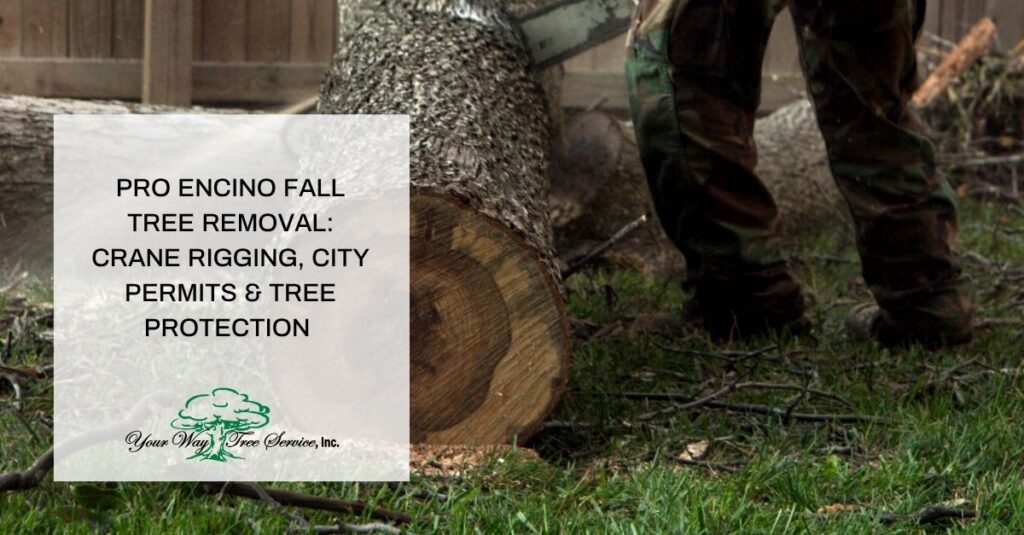
Pro Encino Fall Tree Removal: Crane Rigging, City Permits & Tree Protection
Preparing residential and commercial grounds across the San Fernando Valley before seasonal weather shifts hit is critical for structural safety and landscape longevity. During late autumn, violent Santa Ana wind gusts sweep through Valley neighborhoods, exerting extreme mechanical leverage on top-heavy pine, eucalyptus, and mature oak canopies.
Scheduling proactive fall tree removal in Encino eliminates unstable, root-compromised, or decaying timber before high-velocity wind funnels and heavy late-season rainfall fully saturate local soils. Removing structural hazards shields rooflines, power connections, hardscaping, and perimeter structures from severe windthrow damage.
The unique geography and microclimates of Encino amplify these seasonal weather risks. High-velocity drafts channel down from mountain passes along major Encino San Fernando Valley wind corridors, accelerating across exposed commercial lots and residential streets.
Commercial strip zones and tight residential intersections along the Ventura Blvd and Hayvenhurst Ave pockets experience concentrated wind funnels that place massive lateral stress on unpruned tree limbs.
Compounding this risk is the region’s dense clay soil; heavy autumn rains soften these clay layers, drastically reducing root anchorage and raising the probability of complete tree tipping when high winds hit. Furthermore, unpruned, top-heavy canopy weight distributions act like sails, capturing maximum wind force and transferring dangerous torque directly to structural trunks.
Technical Comparison: Tree Extraction & Hazard Mitigation Strategies
Selecting the appropriate removal or mitigation methodology depends on structural integrity, site accessibility, and proximity to architectural features. The table below outlines key operational metrics for standard vs. advanced tree management strategies:
| Operational Metric | Selective Weight-Reduction Pruning | Standard Ground Crew Dismantling | Heavy Crane-Assisted Rigging Extraction | Emergency Microburst Extraction |
|---|---|---|---|---|
| Primary Site Indication | Overburdened, top-heavy intact canopies[cite: 50] | Open yards with wide lateral clear zones[cite: 50] | Tight zero-lot-line, hillside, or obstruction-heavy lots[cite: 50] | Fallen, structurally failed, or utility-blocking timber[cite: 50] |
| Structural Impact Profile | Preserves tree; reduces sail effect & torque[cite: 50] | Moderate ground footprint; lowered branch sections[cite: 50] | Zero ground impact; vertical overhead extraction[cite: 50] | Rapid stabilization; structural load removal[cite: 50] |
| Permit Requirement Status | Required for protected species if >10% cut[cite: 50] | Required for protected species or public right-of-way[cite: 50] | Standard UFD permits plus street/lane closure permits[cite: 50] | Post-emergency exemption filing with UFD evidence[cite: 50] |
| Site Accessibility Needs | Standard climber or aerial lift access[cite: 50] | Direct ground drop zone within drip line[cite: 50] | Crane staging pad; clear vertical boom vector[cite: 50] | Emergency vehicle clearance and utility isolation[cite: 50] |
| Safety Risk Level | Low to Moderate[cite: 50] | Moderate[cite: 50] | Extremely Low (controlled mechanical hoist)[cite: 50] | High (unstable timber under active strain)[cite: 50] |
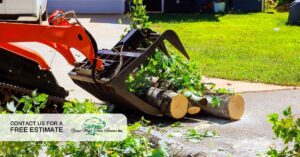
Pre-Winter Santa Ana Wind Preparation and Hazard Mitigation
When severe weather patterns shift in the Valley, a compromised tree branch can instantly become a major hazard. Proactive autumn management significantly decreases the likelihood of middle-of-the-night tree failures that crush vehicles, tear down utility lines, or block access roads. Certified arborists utilize a rigorous multi-point property assessment checklist to identify critical structural vulnerabilities before Santa Ana wind events occur:
- Vertical Trunk Fissures: Deep vertical cracks running along primary trunk junctions or heavy leader limbs that signal internal structural failure.
- Canopy Deadwood Accumulation: Large deadwood sections within the upper canopy showing signs of fungal decay, wood-boring beetles, or dry rot.
- Root Plate Instability: Root plate lifting, soil cracking, or severe mounding at the base of heavy specimens, indicating lost root anchorage.
- Severe Structural Lean: Excessive lean pointing toward homes, guest houses, swimming pools, power lines, or adjoining properties.
- Pathogenic Cavities: Internal hollows and open trunk cavities caused by wood-rotting pathogens or historical pruning injuries.
How do Santa Ana winds affect tree stability in Encino?
Santa Ana winds create high-velocity wind funnels that place extreme torque on top-heavy, unpruned tree canopies. When combined with autumn rainfall that saturates and softens San Fernando Valley clay soils, root anchorage is compromised, dramatically increasing the risk of sudden windthrow and structural trunk failure.
When hazardous trees present an immediate threat to structures or public rights-of-way, certified teams deploy specialized equipment to extract high-risk timber safely before extreme weather strikes.
Partnering with a professional team for commercial tree service in Encino ensures commercial real estate, HOAs, and residential estates maintain full liability compliance and structural safety year-round.
Navigating City of Los Angeles Tree Removal Permits & Protected Species
Removing hazardous or dead trees within the City of Los Angeles requires strict compliance with municipal forestry regulations. Key indigenous species are legally protected under the City of Los Angeles Municipal Code, requiring formal arborist evaluations, site inspections, and public notices prior to any canopy alterations, root pruning, or ground disturbance.
Regulated Indigenous Tree Species in Encino
- Coast Live Oak (Quercus agrifolia): Highly regulated native trees requiring formal certified evaluation, structural risk appraisal, and UFD permit authorization before any significant pruning or total removal actions occur.
- Western Sycamore (Platanus racemosa): Riparian native species protected under municipal code, demanding specialized health documentation and replacement planting plans for removal requests.
- Southern California Black Walnut (Juglans californica): Rare native species strictly protected against ground disturbance, root zone compaction, or unauthorized extraction.
- California Bay Laurel (Umbellularia californica): Protected native tree requiring dedicated municipal permits for severe canopy alteration or removal on private and commercial property.
Working with ISA Certified Arborists ensures that all City of Los Angeles Urban Forestry Division (UFD) permit applications, structural risk appraisals, tree disclosure reports, and mandatory replacement planting plans are drafted and submitted correctly, fully protecting property owners from stop-work orders and municipal code violations.
Heavy Crane Rigging & Precision Extraction for Tight Estate Lots
Many mature properties located south of Ventura Boulevard feature dense architectural layouts, steep hillside grading, zero-lot-line structures, and restricted side-yard access that complicate standard tree removal. Dropping large timber manually in confined yards risks damaging adjacent structures, custom outdoor kitchens, decking, swimming pools, and utility connections.
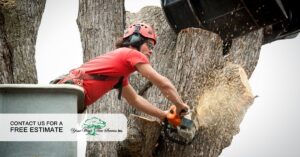
Deploying specialized heavy machinery for Encino fall tree removal allows certified crews to lift massive trunk sections cleanly over rooftops with pinpoint precision and zero ground impact. Hydro-ground stabilization, weight-distribution pads, and precise boom vector calculations guarantee that hillside real estate and tight estate lots are fully protected throughout the extraction process.
Following timber extraction, complete stump grinding well below grade eliminates root sprouting, removes trip hazards, and stops wood-destroying pests like termites and carpenter ants from colonizing remaining underground wood.
Encino Fall Tree Removal Questions
What makes fall the ideal time for tree removal in Encino?
Executing tree removal during late autumn eliminates structural hazards before severe Santa Ana winds and winter rainstorms hit the San Fernando Valley. Autumn removal prevents windthrow, opens up the surrounding canopy for spring growth, and stops fungal pathogens residing in deadwood from spreading during wet winter months.
Do I need a city permit to remove a tree on my Encino property?
Yes, if the tree is a protected native species (such as Coast Live Oak, Western Sycamore, Southern California Black Walnut, or California Bay Laurel) or if it meets specific trunk diameter thresholds under City of Los Angeles municipal code. A permit from the Urban Forestry Division (UFD) is required prior to removal.
How does crane-assisted tree removal protect my property?
Crane-assisted tree removal hoists severed trunk sections vertically into the air and over structures, eliminating ground friction, branch drops, and heavy equipment movement across delicate turf, swimming pool decks, or outdoor hardscaping. It is the safest extraction method for zero-lot-line and hillside properties.
What are the main signs that a tree is at risk of falling during a storm?
Key indicators include deep vertical cracks along the trunk, large deadwood branches in the upper canopy, mushroom growth or fungal rot at the base, visible soil lifting or cracking around the root plate, and an unnatural, sudden lean toward structures or power lines.